Louisville’s location along the Ohio River creates a perfect storm of weather challenges that test commercial roofs year-round. The summers are hot and muggy, the winters are very cold and wet, and it is partly cloudy year round, with temperatures typically varying from 28°F to 88°F. For business owners and property managers, understanding these weather threats and implementing the right solutions is essential to protecting your investment and avoiding costly disruptions.
Your commercial roof faces more than just rain and sunshine. Louisville’s unique climate creates multiple attack vectors that can compromise even the best-maintained roofing systems. Here’s what you’re up against and how to fight back.
The Louisville Weather Gauntlet
Louisville experiences hot, humid summers with temperatures rarely exceeding 100°F and moderately cold winters, combined with proximity to the Ohio River that creates increased humidity and unique weather patterns. This combination subjects commercial roofs to extreme stress throughout the year.
The city receives substantial precipitation, with May being the wettest month at nearly 5 inches of rainfall. This constant moisture exposure challenges waterproofing systems and creates ideal conditions for membrane deterioration. Add in the urban heat island effect, and your roof experiences temperature extremes that accelerate aging.
Challenge 1: Severe Thunderstorms and Hail
Louisville experiences regular severe thunderstorms from spring through fall, bringing damaging hail that can destroy commercial roofing systems in minutes. Thermoplastic polyolefin (TPO/PVC) membranes can withstand hailstones up to 1 3/4 inches in diameter, while EPDM roof membranes can resist damage from up to 2 1/2 inch hailstones.
However, as roofing materials age, their hail resistance decreases significantly. TPO membranes become more vulnerable as plastics deteriorate over time, leaving them susceptible to punctures and cracks.
Solutions:
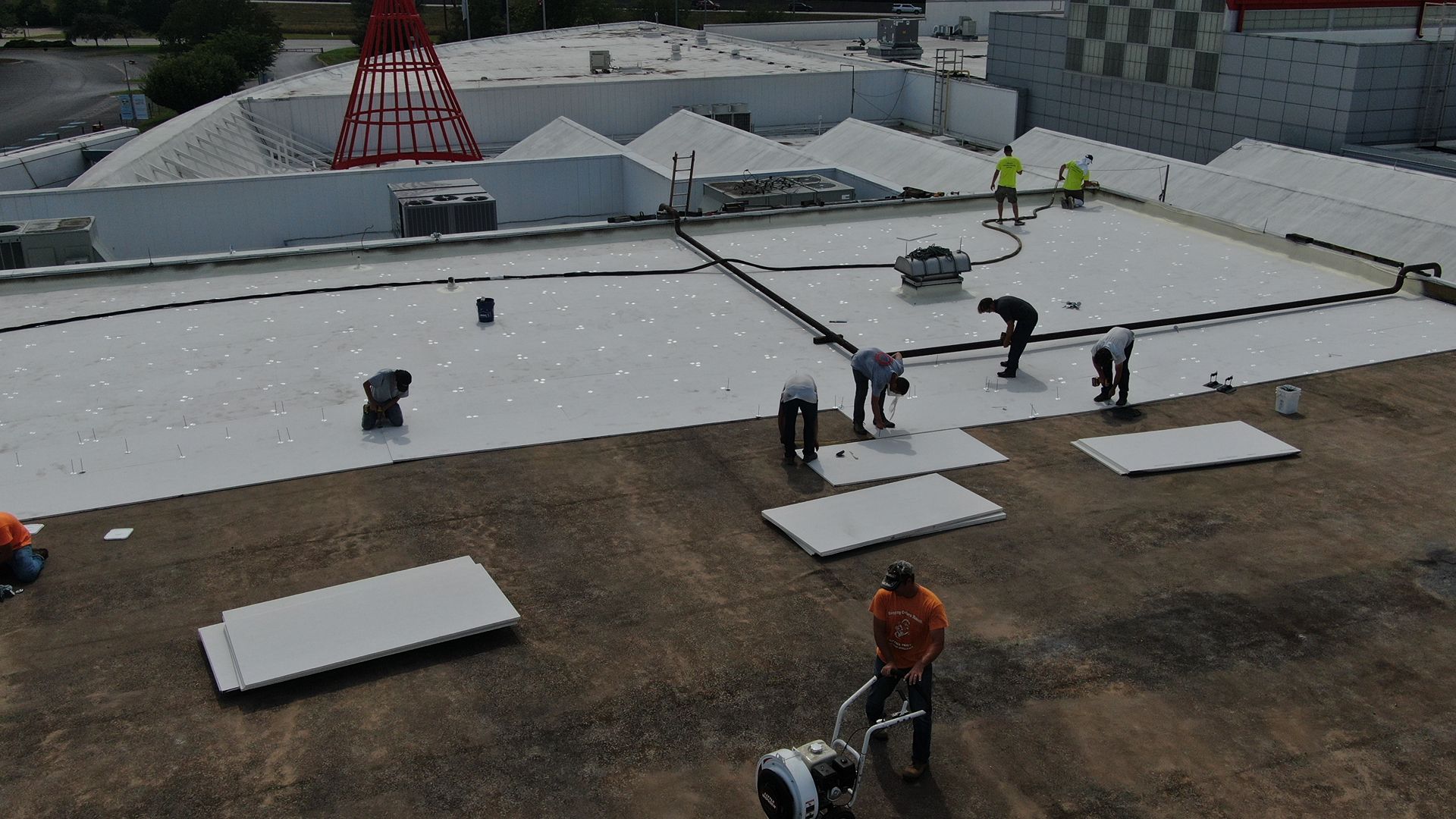
Install impact-resistant roofing systems designed for hail-prone regions. Installing special hail resistant insulation during initial install on TPO and EPDM can significantly enhance the membrane’s resistance to hail impact. For existing roofs, adding rigid insulation boards beneath aging membranes provides additional protection.
Schedule immediate post-storm inspections. Hail damage often appears as semicircular patterns or spider-web cracks that may not cause immediate leaks but compromise the roof’s integrity. Document all damage promptly for insurance claims.
Challenge 2: High Winds and Tornado Activity
Louisville has regular thunderstorms, occasional tornadoes, damaging hail events, and documented tornado climatology throughout Jefferson County’s history. High winds can lift roofing membranes, damage flashing, and deposit debris that punctures roofing materials.
Solutions:
TPO roofs are typically mechanically fastened or fully adhered, which gives them excellent wind uplift resistance when installed correctly. Choose installation methods appropriate for Louisville’s wind exposure. Mechanically fastened systems with proper fastener spacing provide superior wind resistance.
Rubber roofing, also known as EPDM roofing, is flexible, durable, and resistant to UV rays and ozone exposure, making it ideal for withstanding wind uplift and extreme weather conditions. Select roofing materials with enhanced wind ratings specifically designed to withstand severe weather common to Louisville.
Secure all roof-mounted equipment, HVAC units, and penetrations with reinforced attachment points. Trim overhanging tree branches before storm season to prevent debris damage.
Challenge 3: Extreme Temperature Swings
Louisville’s climate produces dramatic temperature fluctuations, particularly during spring and fall when daily highs and lows can vary by 30 degrees or more. These swings cause roofing materials to expand and contract repeatedly, stressing seams, fasteners, and waterproofing.
Louisville has one of the fastest-growing urban heat islands in the country, with temperatures up to 10°F higher in low-canopy areas, intensifying thermal stress on roofing systems.
Solutions:
Select roofing materials designed for thermal cycling. EPDM performs well in extreme temperature swings with excellent elasticity that can expand and contract without cracking, which is key in freeze/thaw cycles.
Install reflective roof coatings to reduce heat absorption. White or light-colored coatings can lower roof surface temperatures by up to 50°F during Louisville’s brutal summer months, reducing thermal stress and lowering cooling costs.
Ensure proper expansion joints and termination bars accommodate thermal movement without compromising waterproofing.
Challenge 4: Heavy Rainfall and Ponding Water
With average annual rainfall exceeding 40 inches, Louisville commercial roofs must handle substantial water volume. Poor drainage leads to ponding water, which accelerates membrane deterioration and can cause catastrophic leaks.
Solutions:
Design drainage systems with adequate capacity for Louisville’s rainfall intensity. Install properly sloped roofs with multiple drains, scuppers, and overflow systems. The minimum slope for commercial flat roofs should be 1/4 inch per foot.
Conduct seasonal drainage testing before spring and fall rainy seasons. Clear all drains, gutters, and downspouts of debris that restricts water flow.
Consider tapered insulation systems that create positive drainage to eliminate ponding water areas. Even on flat roofs, proper slope prevents standing water that shortens roof lifespan.
Challenge 5: High Humidity and Moisture Intrusion
Louisville’s proximity to the Ohio River creates elevated humidity levels year-round, averaging between 73% and 80%. High humidity accelerates mold growth, promotes corrosion of metal components, and can saturate insulation if moisture barriers fail.
Solutions:
Install vapor barriers appropriate for Louisville’s humid climate. Proper vapor retarder placement prevents moisture migration into roofing assemblies.
TPO seams are heat-welded, creating a fused, watertight bond that makes TPO less likely to leak at the seams, especially on large commercial buildings where there are many overlaps. Select roofing systems with superior waterproofing characteristics.
Schedule infrared moisture scanning annually to detect trapped moisture before it causes structural damage. Early detection saves thousands in repair costs.
Challenge 6: Freeze-Thaw Cycles
Winter brings freezing temperatures that create ice dams, damage flashing, and cause membrane brittleness. The freeze-thaw cycle, where temperatures alternate above and below freezing, is particularly destructive.
Solutions:
Ensure adequate roof insulation to prevent heat loss that contributes to ice dam formation. Proper attic ventilation regulates temperature and prevents snow melt on the roof surface.
Use cold-weather roofing materials that remain flexible in freezing temperatures. Some roofing membranes become brittle below 40°F, making them vulnerable to cracking.
Remove excessive snow accumulation promptly, but avoid aggressive removal that damages membranes. Commercial roofs should be designed for Louisville’s snow load requirements.
Choosing the Right Roofing System
Not all commercial roofing systems perform equally in Louisville’s climate. Consider these options:
TPO Roofing: Excellent reflectivity, superior wind resistance with mechanically fastened systems, and heat-welded seams provide outstanding waterproofing. Best for buildings prioritizing energy efficiency and wind protection.
EPDM Roofing: Superior flexibility handles temperature extremes well, better hail resistance than TPO, and cost-effective installation. Ideal where thermal cycling and hail are primary concerns.
Modified Bitumen: Enhanced durability and puncture resistance, performs well in temperature extremes, and offers superior waterproofing. Good choice for high-traffic roofs with equipment.
Metal Roofing: Excellent longevity, superior wind and fire resistance, and energy-efficient when properly coated. Best for buildings seeking 40-plus year service life.
Proactive Protection Strategies
Regular maintenance prevents weather-related failures. Schedule semi-annual inspections in spring and fall to catch damage before it escalates. After every severe weather event, conduct roof walks to document storm damage.
Work with qualified Louisville commercial roofing contractors who understand local weather patterns and building codes. Professional installation and maintenance programs extend roof life and validate warranty coverage.
Document all inspections, maintenance, and repairs. This documentation supports insurance claims, proves proper maintenance for warranty compliance, and helps track your roof’s condition over time.
Take Control of Your Roof's Future
Louisville’s weather won’t get easier, but your response can get smarter. Understanding the specific challenges your commercial roof faces allows you to implement targeted solutions that extend lifespan and prevent costly failures.
Don’t wait for the next storm to expose vulnerabilities. Contact a licensed Louisville commercial roofing contractor today for a comprehensive assessment. Invest in weather-appropriate roofing systems and proactive maintenance to protect your business from Louisville’s relentless climate challenges.