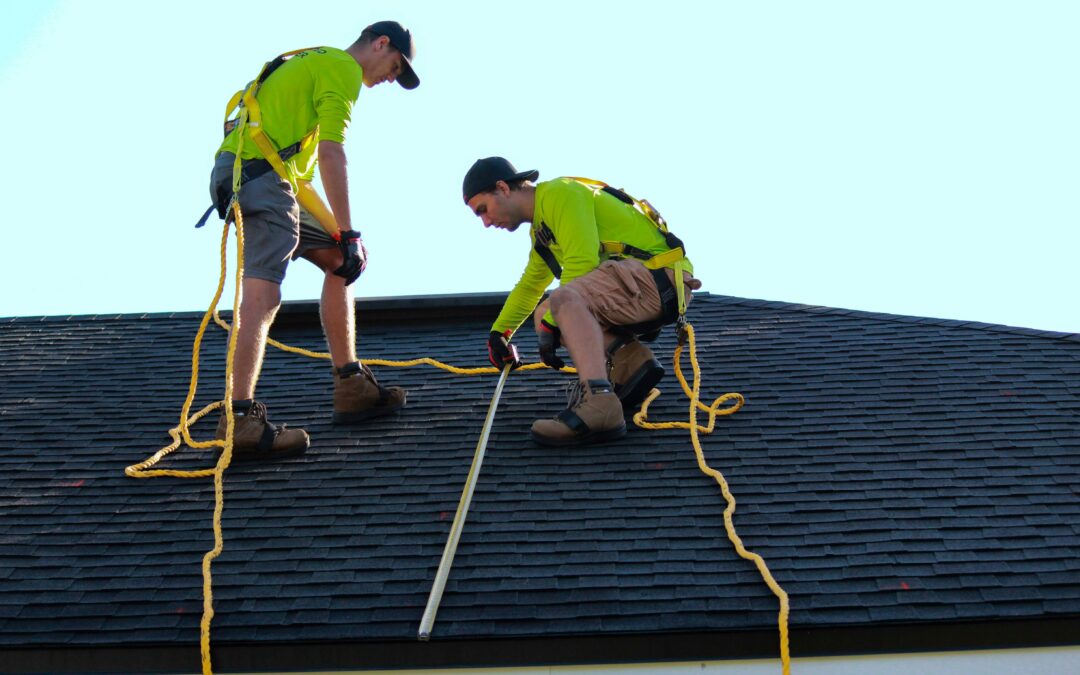
Every commercial roof project in Bowling Green starts with a question that rarely appears on a bid: how will the crew stay safe at the edge? The answer shapes schedules, costs, and liability for you as the building owner. It also separates a professional roofing contractor from a risky one.
In this guide, we explain the federal fall protection rules in OSHA Subpart M and what they mean for apartment complexes, student housing, and institutional buildings across Warren County. If you are comparing Bowling Green commercial roofing options, these rules give you a smarter way to evaluate every bid.
What OSHA Subpart M Requires of Roofing Contractors
OSHA, the Occupational Safety and Health Administration, is the federal agency that sets workplace safety rules. Subpart M of its construction standards (29 CFR Part 1926) covers fall protection. Falls remain the leading cause of death in construction, according to OSHA, and federal injury data from the Bureau of Labor Statistics tracks that toll every year.
The core rule is simple. Construction employees working at unprotected edges 6 feet or more above a lower level need fall protection. Roofers reach that height the moment they step onto most commercial buildings, and the full text is available in Subpart M.
Kentucky enforces these rules through its own state plan, overseen by the Kentucky Education and Labor Cabinet. State enforcement must be at least as effective as the federal standard, so contractors here answer to the same expectations. With the rule in view, let’s look at how it applies to the roofs you own.
Fall Protection Systems Commonly Used on Commercial Roofs
Subpart M does not prescribe one method. It lists several accepted systems, and the right choice depends on the roof. Contractors typically use these:
- Guardrail systems: Permanent or temporary barriers built along roof edges. The top rail must sit about 42 inches above the working surface.
- Safety net systems: Nets installed below the work area to catch a worker who falls.
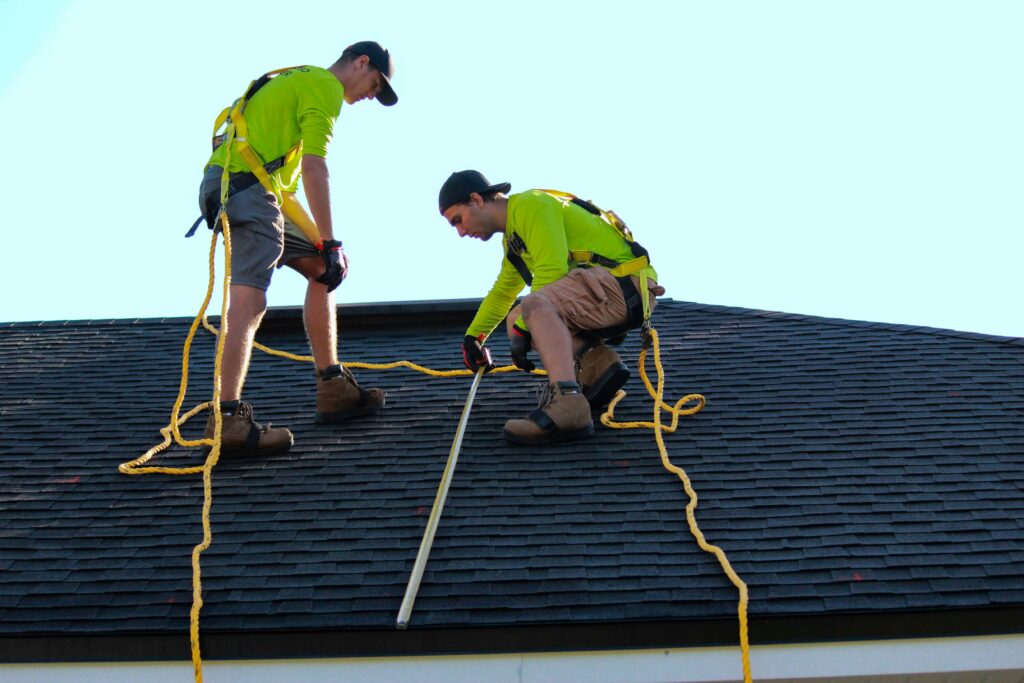
- Personal fall arrest systems: A harness, lanyard, and secure anchor point that stop a fall in progress. Anchors must support 5,000 pounds per worker or meet engineered design requirements.
- Warning lines: Visible barriers set back from the roof edge on low-slope roofs to mark where workers must not pass without added protection.
- Safety monitoring: A trained person who watches for hazards and warns crew members. OSHA permits it under limited conditions, such as roofs 50 feet wide or less.
These options look different depending on roof design, which leads to the next point.
How Roof Type Changes the Rules
OSHA treats low-slope and steep roofs differently, and our region’s commercial buildings include both. Low-slope roofs (pitched 4 inches of rise per 12 inches of run or less) are common on apartment complexes, institutional buildings, and flat-roofed student housing. Section 1926.501(b)(10) lets crews on these roofs combine warning lines with guardrails, safety nets, or personal fall arrest systems.
That matters for common low-slope work such as flat roof repair, TPO roof coating, and single ply roofing. Crews spend long stretches near open edges on these jobs, so the protection plan must cover the whole work area. The same applies to spray foam roofing and a seamless roof system.
Steep roofs face a stricter standard under Section 1926.501(b)(11). Crews must use guardrails, safety nets, or personal fall arrest systems, with no warning-line shortcut. Some metal roofs, including those in a metal roof restoration project, are steep enough to fall under this rule, and roof openings such as skylights and hatches require covers or guardrails.
Rule details only matter if the crew is trained to apply them. That is where Subpart M reaches beyond equipment.
Training, Planning, and Why It Matters to Property Owners
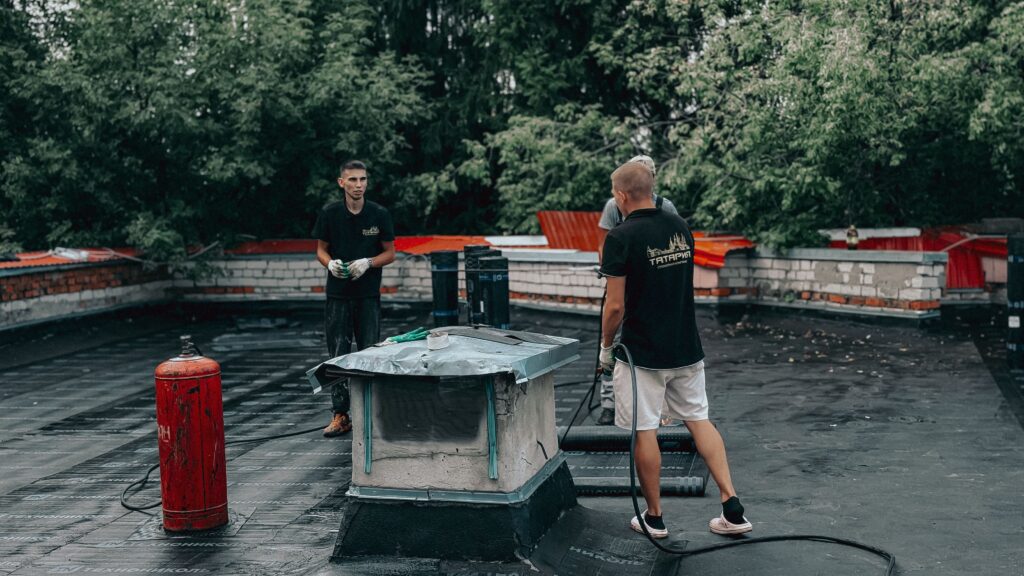
OSHA requires employers to train each worker who might be exposed to fall hazards. Training covers how to recognize hazards, use the equipment correctly, and inspect gear before each shift. A written site plan that identifies fall hazards and the chosen protection method is a sound practice on larger commercial jobs.
For owners and facility managers, this has practical consequences. A job site injury can stall a roof replacement mid-project and expose your property to disputes and insurance questions. Weather makes timing even tighter in Kentucky, where storm seasons can push projects into narrow work windows.
Planned work is also safer than emergency work. That is why we encourage regular commercial roof maintenance, which catches small problems early so a commercial roof leak repair does not become a rushed job on a wet, slick surface. Scheduled commercial roof repair and commercial roof coating work also give a crew time to set up protection properly.
Before you sign a contract with any roofer, including us, ask these questions:
- What fall protection method will the crew use on my roof’s slope and edge conditions?
- How are workers trained, and how often is equipment inspected?
- Who is responsible for safety on site each day?
- Can you provide current proof of insurance?
Clear answers show the same discipline that protects the finished roof. You can also browse our project gallery and read our client reviews to see how we present our work. Put those checks to use in the final step of your decision.
Talk With a Bowling Green Commercial Roofing Contractor
Understanding Subpart M gives you a better way to compare bids. You can see which contractors plan for safety instead of treating it as an afterthought. That clarity protects your tenants, your budget, and your building.
Anti-Leak Roofing is a commercial roofing contractor based in Bowling Green, KY, and we serve Central Kentucky, including Glasgow and Elizabethtown. You can learn more about our team before you reach out. If you manage an apartment complex, student housing, or an institutional building and want to talk through a roofing project, contact us today to start the conversation.