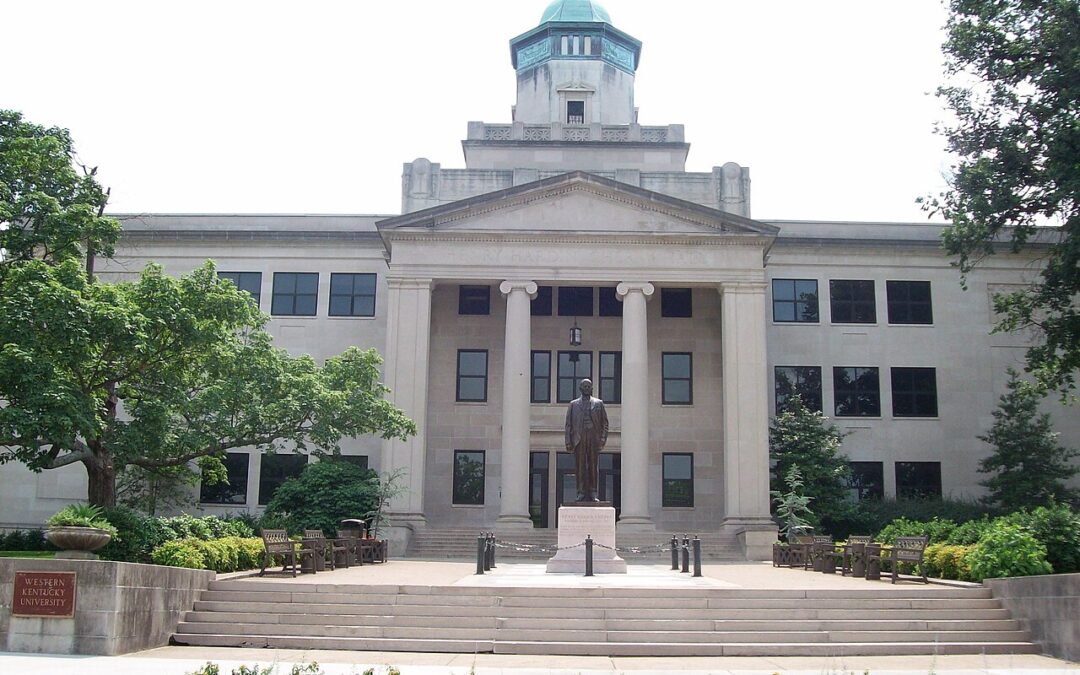
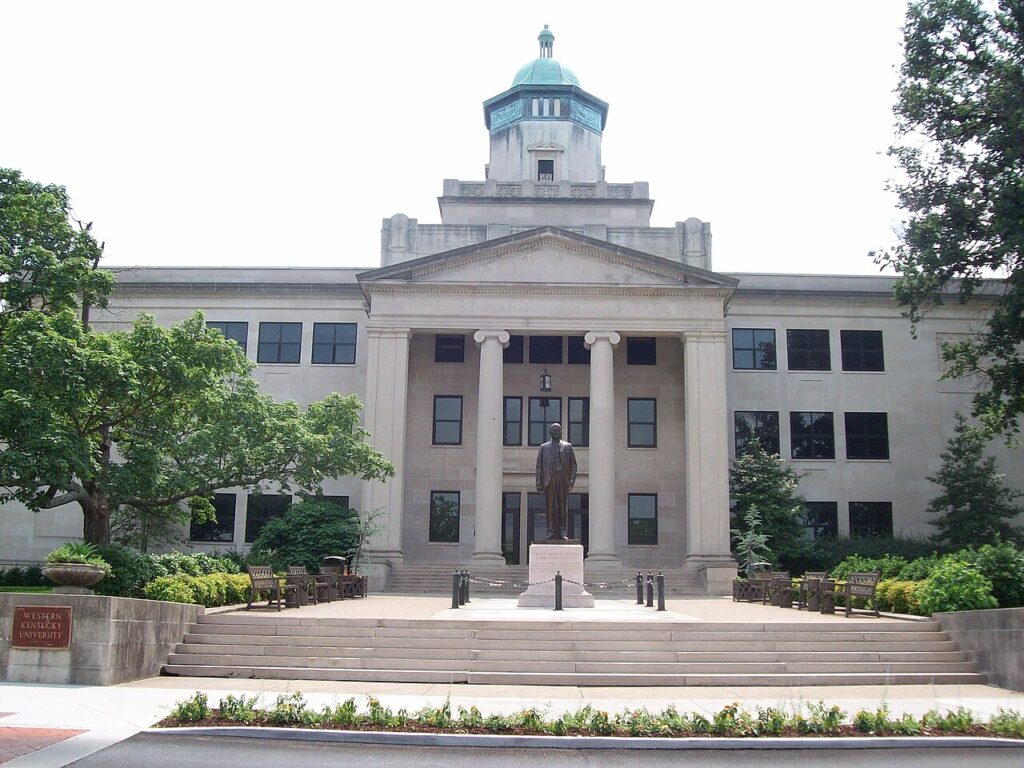
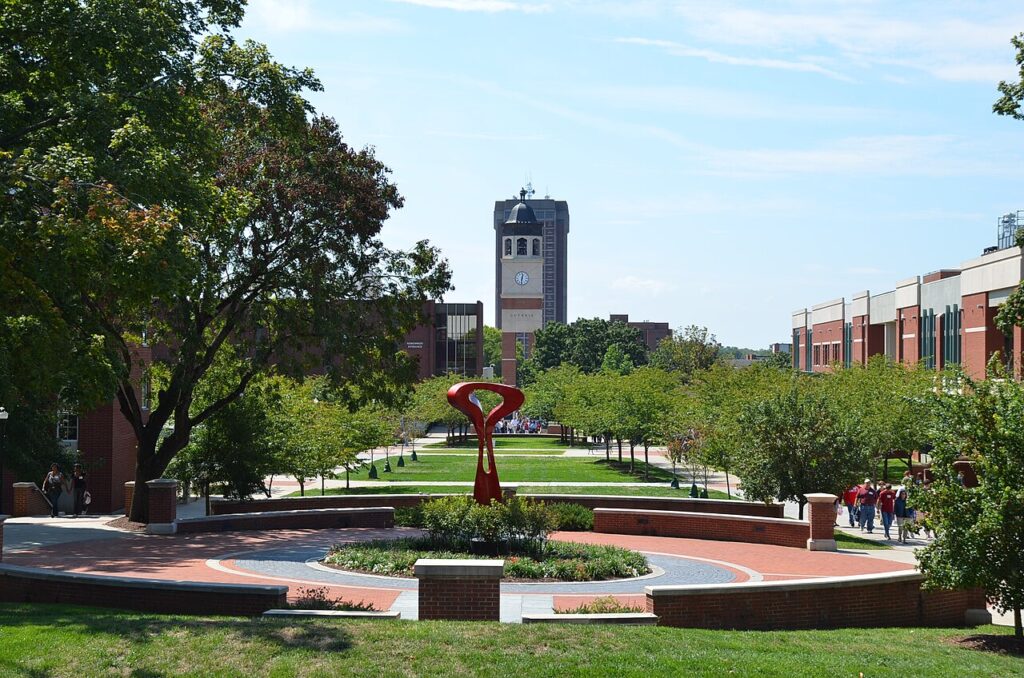
Bowling Green, Kentucky, sits about 110 miles south of Louisville and 65 miles north of Nashville, and education anchors much of its identity. Western Kentucky University (WKU) occupies a hilltop campus above the city, and its presence shapes where people live, what gets built, and how buildings age. This article explains how WKU and the surrounding schools form an educational hub, then connects that hub to the weather and building standards that affect local property.
How WKU Became the Center of Bowling Green’s Education Scene
The story starts in 1906, when Henry Hardin Cherry donated Southern Normal School to the state. That gift became the basis of Western State Normal School, a “normal school” being an institution that trains teachers.
That teacher-training origin still shapes campus life. According to WKU’s own overview, the university now offers more than 170 undergraduate programs and over 100 graduate programs through five colleges:
- College of Education and Behavioral Sciences
- College of Health and Human Services
- Gordon Ford College of Business
- Ogden College of Science and Engineering
- Potter College of Arts & Letters
Beyond these colleges, the campus hosts the Carol Martin Gatton Academy of Mathematics and Science, Kentucky’s first two-year residential STEM program for gifted high school juniors and seniors. Together, these programs make the campus a center for both general and specialized education in south central Kentucky.
Schools and Institutions Beyond the Hilltop
WKU is not the only educational presence in the city. Southcentral Kentucky Community and Technical College and the Bowling Green Adult Learning Center serve students pursuing technical training and adult education. Meanwhile, the Bowling Green Independent School District covers the inner city, and Warren County Public Schools serves the outlying areas.
Several private schools also operate locally, including Legacy Christian Academy, Foundation Christian Academy, Holy Trinity Lutheran, Old Union School, and Saint Joseph Interparochial School. This mix of public, private, and higher education helps explain why a city of 72,294 residents in the 2020 census, the third largest in Kentucky, supports so many campuses and school buildings.
The Economic Footprint of Education on Local Property
Education also drives the local economy in measurable ways. A 2022 report listed WKU as the largest employer in Bowling Green, with 3,274 employees. A 2011 study estimated that WKU salaries account for about 10 percent of all income earned in Warren County.
That economic weight shows up in the built environment. Student housing, rental homes, apartment complexes, and institutional buildings all depend on steady maintenance, and buildings on any campus reflect different construction eras. E.A. Diddle Arena, for example, was built in 1963 and renovated in 2004. Because so many properties serve renters, students, and visitors, durable building envelopes (the roof, walls, and windows that separate indoor and outdoor space) matter to owners and managers alike.
Bowling Green’s Climate and Its Effect on Campus and Neighborhood Roofs
Local weather places real demands on those buildings. Bowling Green has a humid subtropical climate, receives roughly 47 to 50 inches of precipitation a year, and averages about 41 days at or above 90°F. Winters bring around 8.4 inches of snow on average, with about 11 days a year when highs stay at or below freezing. Repeated heating, cooling, and wetting stresses roofing materials over time.
Pitched Roofs on Homes and Rentals
Many houses and small rental properties use pitched roofs covered in asphalt shingles. Summer heat and ultraviolet exposure gradually dry out the asphalt, while storms can lift shingle edges through wind uplift, the upward force wind exerts on a roof surface. Missing shingles, damaged flashing (thin metal that seals joints and penetrations), and weak attic ventilation often appear first at these vulnerable points.
Low-Slope Roofs on Institutional Buildings
Larger campus, school, and commercial buildings often use low-slope roofs with membrane systems such as TPO, EPDM, or modified bitumen. A membrane is a continuous waterproof layer, and these systems depend on well-sealed seams and good drainage. Standing water, known as ponding, can accelerate wear when drains clog or the roof deck settles.
Severe weather raises the stakes further. On December 11, 2021, two tornadoes struck the Bowling Green area, and the National Weather Service in Louisville documented both. It rated the first an EF3 with estimated peak winds of 165 mph, a 29.8-mile path, and 17 fatalities. The Enhanced Fujita scale, which rates tornadoes from EF0 to EF5 based on the damage they cause, also classed the second tornado as an EF2, with estimated peak winds of 125 mph along a 6.1-mile path in Warren County.
Kentucky Building Codes and Roof Standards
Building codes set the baseline for how Bowling Green’s structures handle that weather. According to the Kentucky Department of Housing, Buildings and Construction, the state adopted the 2018 Kentucky Residential Code and Building Code on August 3, 2019. The residential code builds on the 2015 International Residential Code, while the Kentucky Building Code, which governs non-residential buildings, builds on the 2015 International Building Code. Kentucky adds its own amendments to both.
Roof performance standards add detail beneath those codes. Wind resistance for asphalt shingles is commonly classified through ASTM test methods, such as the following:
- ASTM D3161: a fan-induced wind test, with Class F covering 110 mph
- ASTM D7158: a wind-uplift test, with Classes D, G, and H covering 90, 120, and 150 mph
Ultimately, WKU, the local school districts, and the technical college give Bowling Green a large inventory of educational buildings and housing. That inventory ages under hot summers, steady rainfall, occasional snow, and sudden severe storms. Understanding how education shapes the city’s building stock helps residents, landlords, and property managers see why roof maintenance and code compliance remain ongoing local concerns.